


Blog
The Future We Inherit is the Future We Educate For
2 July 2026


Written by Generation Citizen CEO Elizabeth Clay Roy
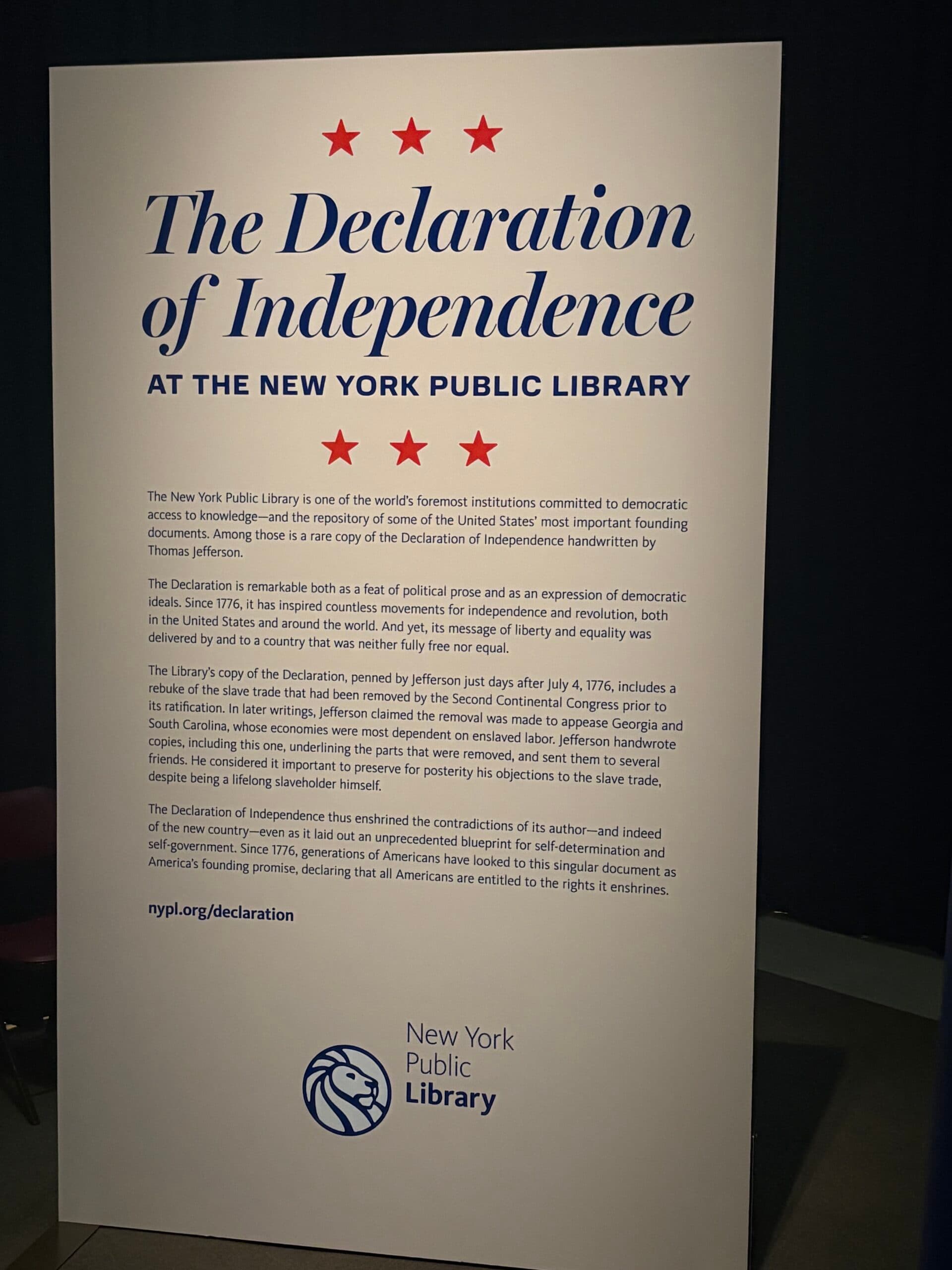
Yesterday, I visited the New York Public Library to see the handwritten “fair copy” of the Declaration of Independence. It is a unique document, because it includes Thomas Jefferson’s words decrying the injustice of slavery, words that were excised from the draft ratified by the 2nd Continental Congress on July 4th, 1776. As we know, many of the signatories of this foundational text held enslaved Africans as property throughout their lives, including Jefferson himself. This founding contradiction, celebrating liberty for all while “violating its most sacred rights of life & liberty” for others, remains with us in 2026. This is one of many examples of what Dr. Eddie Glaude Jr. powerfully argues in America, U.S.A.: our national anniversaries have always been shadowed by a deep contradiction, between our soaring ideals and our lived realities.
I feel this contradiction intimately, as the descendant of enslaved Africans brought to Virginia during the turbulent period of the American Revolution. My lineage informs my reading of American history, where I feel aligned with the patriotism of aspiration chronicled in Langston Hughes’s famous 1935 poem, “Let America Be America Again” and the oratory of critical patriots like Frederick Douglass. As Douglass so incisively wrote in 1846:
“The best friend of a nation is he who most faithfully rebukes her for her sins—and he her worst enemy who, under the specious… garb of patriotism seeks to excuse, palliate or defend them.”
This patriotism of aspiration demands that we face the interlocking crises of hope, belonging, and trust that undergird the frailty of our democracy today. Instead of blaming the individual who feels civic despair, isolation, or mistrust, we must ask a fundamental question: How can we make our democracy worthy of hope, a joy to belong to, and authentically trustworthy? What role do schools play, as one of our most enduring public institutions, charged with preparing each generation of citizens?
The future we will inherit is the future we educate for. The work of preparing a generation for an inclusive, pluralistic, and participatory democracy is not a project reserved for moments of comfort or consensus. As we mark the 250th anniversary of the Declaration of Independence this summer, and look ahead to the anniversary of the adoption of the U.S. Constitution in 2037, the nation’s divisions are now a chasm that we cannot see the bottom of. This 11-year window between our founding documents is not merely a time for backward-looking commemoration; it is a critical, urgent period of deliberate hope, connection, and dreamweaving toward the 21st-century America our descendants deserve.
To get there, civic education in 2026 must not simply ask the rising generation to memorize and preserve the systems they have inherited. Instead, we must equip them to think critically, discern what is broken, and cultivate the bold civic imagination required to envision and build a thriving, inclusive, multiracial democracy. Unlocking this civic imagination requires us to establish a continuous path of learning both inside and outside of the classroom.
As I explore in a recent Stanford Social Innovation Review essay, unlocking the full potential of our democracy requires a lifelong commitment to civic learning, one that begins in our earliest years and continues throughout adulthood. By cultivating foundational values like empathy and responsibility at home, building critical knowledge through our elementary education, and empowering our middle and high school students to address real-world challenges through hands-on, project-based work, we can inspire a new generation of leaders. This journey must extend beyond the classroom, offering young adults meaningful service opportunities and ensuring all citizens have accessible pathways to contribute to their communities.
America’s greatest investments in civic learning have emerged during moments of democratic crisis and renewal. While the generation that shaped our founding documents understood an informed citizenry was essential to self-government, the understanding of citizenship itself was too limited. Each generation since has strengthened our democracy by expanding both the promise of citizenship and access to education, from Reconstruction schools and immigrant community schools to universal access to K-12 public education. The lesson of our history is clear: when democracy is tested, we do not retreat from educating the next generation, we deepen our commitment to it.