


Blog
How Community-Based Civics Helps Multilingual Learners Find Their Voice
17 November 2026


We often hear how the subject of math is so beautiful because it is the same in every language. Allow us to make the case that civics deserves to be in that same category.
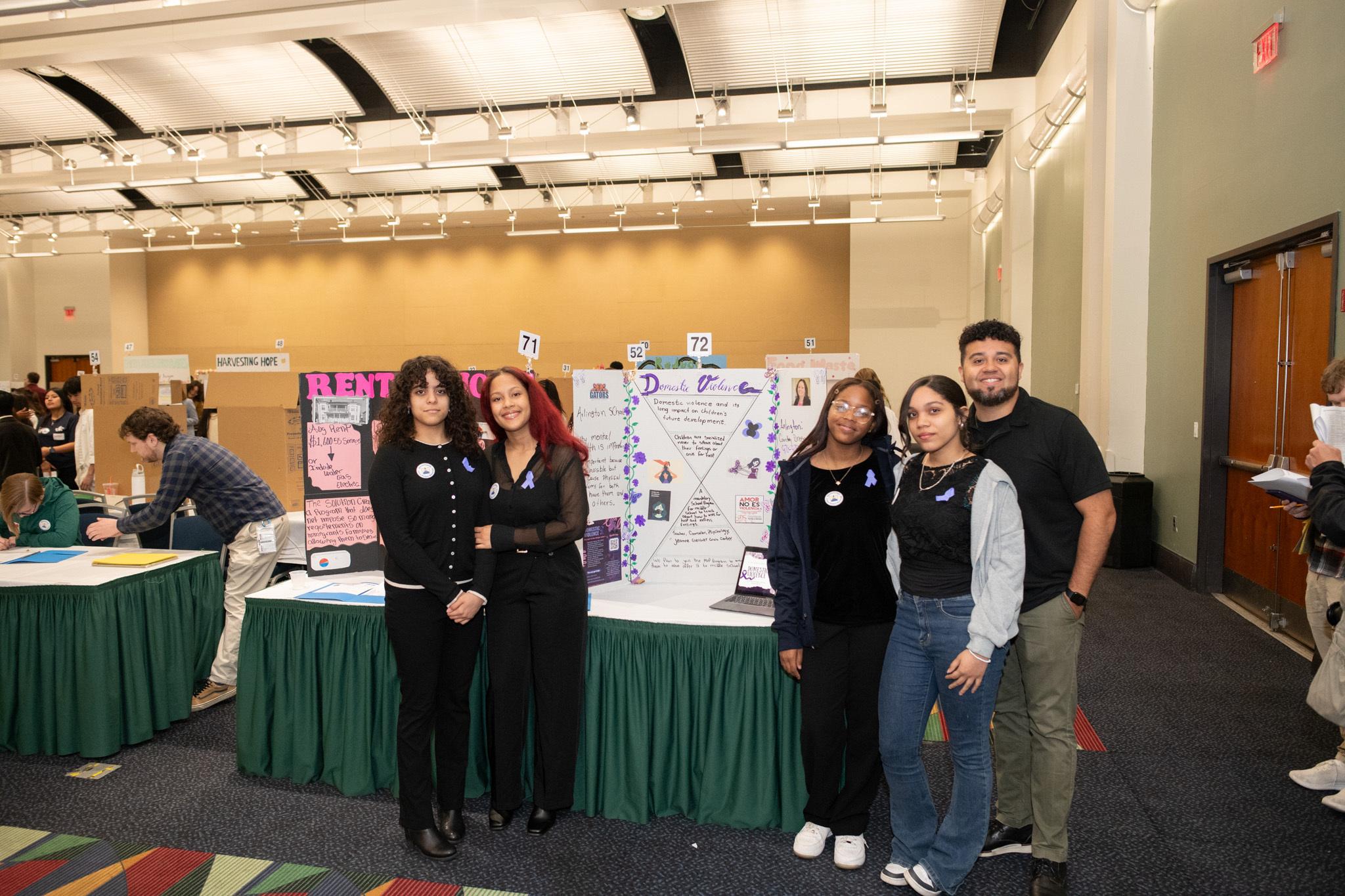
We recently spoke with Jerry Acosta, a Generation Citizen teacher and now administrator in Lawrence, Massachusetts, who had a front row seat to how even language barriers couldn’t keep students from leading in their community with confidence – in the classroom and at the Massachusetts Civic Project Showcase in Worcester.
For context, Lawrence has one of the highest concentrations of multilingual learners in Massachusetts. More than triple the state average in fact (43.4% vs. 13.4% statewide).
Read our conversation with Jerry below to learn more about how civic education transcends adversity.
Q: Can you tell us about the student group behind this project and the challenges they navigated when taking on an issue as heavy as domestic violence?
A: These students were part of our multilingual learner cohort program at Lawrence High School, which serves students with an ACCESS proficiency level of 2 or below. They had only been in the country for about 1–3 years and were still developing their English language skills. They were also Latino students who brought their own cultural backgrounds, experiences, and perspectives into the classroom.
I think what made this project meaningful was that domestic violence was a topic they felt was important to talk about. They brought their own perspectives on family, relationships, and things they had seen or heard about in their communities. Our school community had also experienced a difficult loss involving one of our teachers, which made conversations about violence and its impact on families especially meaningful.
What I appreciated about their project was that they didn’t just want to talk about domestic violence. They wanted to educate people about what it looks like, including the different forms of abuse that aren’t always physical, and provide resources for those who might need help. Their flyer included the message “Be a part of the change today!” along with information about where people could seek support. I think that really captured what they were trying to accomplish.
One of the biggest challenges leading up to the Civic Project Showcase Civics Day was definitely confidence. These were students who were still learning English and hadn’t really had the experience of presenting in front of an audience of monolingual English speakers. Most of their classroom experiences had been alongside other multilingual learners at similar levels of English proficiency. This made the idea of presenting such a serious topic in front of students, educators, and community members they didn’t know intimidating.
There was definitely some hesitation and nervousness, especially because they were worried about making mistakes, not finding the right words, or not being understood. But what I loved was that they didn’t let those fears stop them. They practiced, supported one another, and really took ownership of their project. Seeing them step outside their comfort zones was one of the most rewarding parts of the experience for me as their teacher.
Q: Public speaking in a second language is a significant hurdle. Was there a specific moment during the curriculum or at the Worcester Showcase where you saw their confidence shift?
A: I think the biggest moment for me was seeing them at the Worcester [Civic Project] Showcase. These were some of the same students who would hesitate to raise their hands in class or needed encouragement to speak in English. And here they were, standing in front of people they had never met, explaining their project and having conversations about a really serious issue.
What stood out to me was seeing them take ownership of their work. They weren’t just reading off a poster or repeating information they had memorized. They understood why the topic was important and wanted people to walk away knowing more about domestic violence and the resources available to help those experiencing it.
I think Generation Citizen played a big role in building that confidence because it gave them a real purpose for their learning. They weren’t just doing research or preparing a presentation for a grade. They were working on something they cared about, and they knew their message was going to reach people outside of our classroom.
As a teacher, it was really rewarding to see that growth. I think sometimes we focus so much on what multilingual learners can’t do yet because of the language barrier that we forget how much they actually have to offer. This experience gave them the opportunity to see that for themselves. They realized that even if their English wasn’t perfect, they could still communicate an important message and make an impact.
Q: What did it mean to the students to share their perspectives on such an urgent community issue directly with public audiences?
A: I think one of the most meaningful parts of the experience was having people outside of our school take the time to listen to what the students had to say. For students who were still developing their English and had only been in the country for a few years, that was a big deal.
Their project focused on a serious issue, but they approached it with the goal of educating others and providing support. They weren’t just sharing statistics or definitions. They were explaining the different forms of domestic violence and making sure people knew there were resources available if they or someone they knew needed help.
I think having an audience engage with that message was really powerful for them. It showed them that people were interested in their ideas and that what they had worked on mattered beyond the classroom.
For me, the most rewarding part was seeing the students have that opportunity [to participate in a civics showcase]. Many of them were used to being in environments where they were still learning the language and building their confidence. At the showcase, they had the chance to be the ones teaching others about an issue. I think that was a pretty special experience for them, and something they could walk away feeling proud of.
Q: Why is it so essential for immigrant students and multilingual learners to have platforms like Generation Citizen to lead discussions on issues impacting their communities?
A: This is something I’ve always felt strongly about as an educator, especially working with multilingual learners. I think we sometimes underestimate students because of their English proficiency. Just because a student can’t fully express an idea in English doesn’t mean they don’t understand what’s happening around them or don’t have something important to contribute.
A lot of my students came to this country with experiences and perspectives that were incredibly valuable. They understood challenges in their communities, had opinions about issues affecting their families, and wanted to be part of conversations about making things better. They just needed opportunities to do that.
That’s what I really appreciate about Generation Citizen. It gives students a chance to learn about civic engagement by actually doing it. They’re not just reading about how government works or what it means to be an active member of a community. They’re identifying issues that matter to them, researching those issues, and figuring out how they can make a difference.
I think this group was a great example of that. They took on a difficult topic like domestic violence, learned about the different forms of abuse, and created materials that could help educate others and connect people with resources. Their message was “Be a part of the change today!” and I think that’s exactly what civic education should encourage students to do.
For multilingual learners, experiences like this are especially powerful because they change the way students see themselves. They’re no longer just students learning English. They’re young people with ideas, opinions, and the ability to advocate for their communities.
I always wanted my students to understand that their voices mattered, regardless of where they came from or how much English they spoke. They don’t have to wait until they’re fluent in English or until they’re adults to make a difference. They can start right now, and I think this project was a great example of that.
Stories like Jerry’s and his students in Lawrence underscore that in communities with a high concentration of MLL students navigating early English proficiency, civics education must be accessible. Civic voice and leadership belong to every student regardless of where they are on their language journey.
Considering a partnership between Generation Citizen and your school district? Learn more and reach out today! https://www.generationcitizen.org/partnerships/become-a-partner/
Interested in supporting this work to ensure students continue to have the opportunity to find and own their civic voice? Reach out to learn more about making a difference in a classroom: https://www.generationcitizen.org/get-involved/donate/